

Buyer Protection Explained: Coverage, Claims and Checks
The charge cleared weeks ago. The product stopped working, or never arrived, or turned out to be nothing like the page you bought it from. You've sent two messages to support and gotten one automated reply. Now you're weighing whether to keep emailing, open a dispute, or call your bank, and every route seems to have a catch nobody mentioned at checkout.
That confusion is normal, because buyer protection isn't one thing. It's a stack of separate systems with different rules, different deadlines and different decision-makers, and many only learn which one applies to them after the money is gone. The order you use them in often decides the outcome more than the strength of your complaint does.
Table of Contents
- Buyer Protection Sources and How the Layers Work
- What Buyer Protection Covers and What It Excludes
- Cooling-Off Rights Before You Need a Claim
- Keeping Order Records, Support and Fulfilment Together in AmaJova
- How a Refund or Dispute Claim Works Step by Step
- Matching Your Problem to the Right Remedy
- Check These Points Before You Pay
Buyer Protection Sources and How the Layers Work
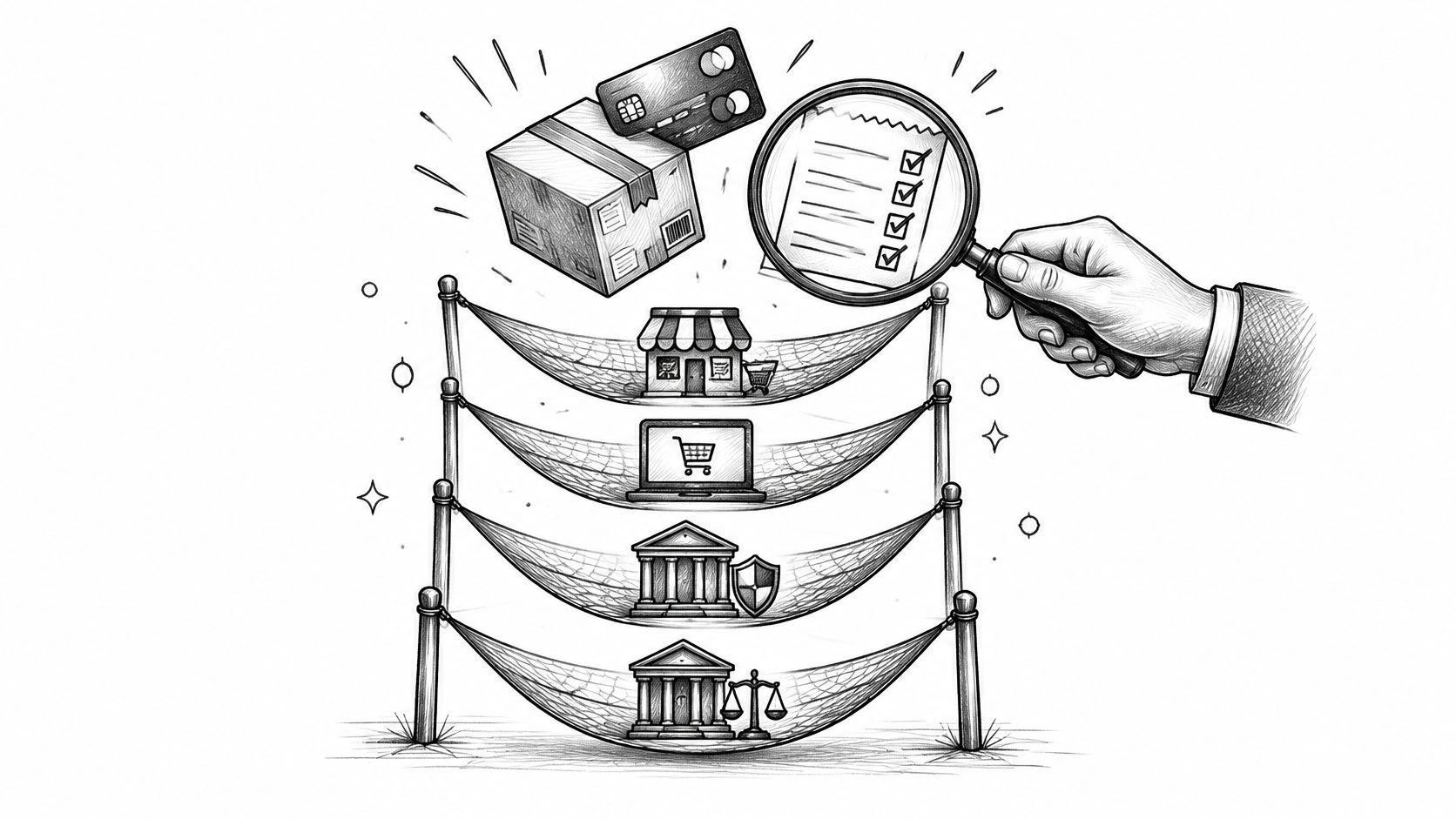
Buyer protection is the set of guarantees, refund routes and legal rights that apply when a purchase goes wrong. Picture a trapeze net with four layers under the performer. The first layer catches most falls. Each lower layer only catches what the one above it missed, and nothing catches a fall that happens outside all four.
The gap between falling and being caught is wider than most shoppers expect. A 2021 OECD survey across multiple markets found that 50% of online consumers had hit at least one shopping problem in the previous year, including scams, fraud and misleading commercial practices. Redress is the weaker half of the story: a separate OECD study in the same body of work reported that 54% of consumers received insufficient or no redress after e-commerce harm, with average detriment of about USD 219 before redress and USD 69 after. Even a case that ends well leaves part of the loss with the buyer.
The four layers, in the order you reach them
- The seller's own refund policy. Fastest route when it works, entirely voluntary in shape, and usually the only one that resolves a satisfaction complaint rather than a rule breach.
- The marketplace or platform guarantee. Applies only if you paid through the platform and stayed inside its resolution window.
- The card issuer or payment provider dispute process. The chargeback route, run on the card network's rules and your issuer's deadlines.
- Consumer law enforced by regulators. Statutory cancellation rights, unfair-practice rules and the agencies that pursue breaches.
Walk a single purchase through all four. Say you pay $200 for an annual software plan, and by month three the app stops syncing and support stops replying. Layer one is a refund request to the seller, which is going nowhere. Layer two is the platform you bought through, if there was one. Layer three is your card issuer, and here the case turns on documents you either kept or didn't: the receipt, the listing page that promised syncing, and a written record of your attempts to reach the seller. Pay by bank transfer or through an app with no dispute process and layer three doesn't exist for you.
Buyer protection sources, typical coverage and claim windows
| Protection source | What it typically covers | Typical claim window | Main limit |
|---|---|---|---|
| Credit card chargeback | Unauthorized charges, goods not received, goods not as described, subject to card network and reason code | Set by your card issuer, so check your card terms before you rely on it | Unauthorized charges go straight to the issuer; other disputes usually need a seller attempt first |
| Debit card dispute | Unauthorized transactions and some merchant disputes | Often shorter than a credit card window, and set by your bank | Weaker recourse than a credit card for many merchant disputes |
| PayPal Purchase Protection | Item not received, item significantly not as described | Set by PayPal, so check the window inside your account | Services, private sales and some categories sit outside it |
| Marketplace guarantee | Item not received or significantly not as described, within platform rules | Set by the platform and often tied to the delivery date | Does not apply to off-platform payments or private arrangements |
| EU statutory cancellation right | Cancelling a distance contract without giving a reason | 14 days from receipt for goods, or from conclusion for services | Exceptions apply, including some digital content once performance begins |
Read it in one direction only. Find the payment method you used, note its window, and save the order record the same day you pay, not the day something breaks. One wrinkle worth knowing before you file anything: if the name on your statement is a payment intermediary rather than the brand you bought from, you're dealing with a merchant of record, and what a merchant of record is decides who legally owes you the refund. Windows and eligibility are set by each provider and change without notice, so confirm the current terms on your own account page rather than trusting a table, including this one.
What Buyer Protection Covers and What It Excludes
Protection works like insurance with a narrow payout list. It covers money lost to things you didn't cause and couldn't reasonably have foreseen, and it rarely covers a decision you changed your mind about. Online shopping raises the exposure, since the European Commission's guidance on buying online reports that online shoppers are over 60% more likely to run into purchase problems than people shopping offline.
You commit before you can hold the thing.
Read the two lists below as a routing table. The qualifying items tell you which remedy to reach for, and the excluded ones tell you where the path ends before it starts.
What usually qualifies:
- Item never delivered. Non-delivery is the cleanest claim you can make, and tracking does most of the arguing for you.
- Item significantly different from its listing. A specification, size or function that contradicts the page, not a colour you stopped liking.
- Unauthorized card charges. Someone used your details without your consent.
- Billing errors and duplicate charges. Two charges for one order, or a renewal charged after a documented cancellation.
- Defective goods inside warranty. Faults that show up in normal use.
What usually doesn't:
- Change of mind on physical goods, once statutory cancellation windows close.
- Damage from misuse. Water damage, cracked screens, products used outside their stated purpose.
- Used items sold as used. Wear that was disclosed in the listing.
- Services already fully consumed. A completed consultation or a fully attended session.
- Private sales and off-platform payments. The layer disappears entirely.
- Claims filed after the window. A valid case can still fail once the deadline has passed, so the date you file matters as much as the evidence you hold.
Digital goods hold the sharpest surprise. Once a download or account access is granted, many sellers and platforms treat the purchase as final, so a course you bought, downloaded and watched can sit outside the refund policy even when it disappointed you. Misleading listings make that gap more dangerous: the European Commission's consumer conditions survey found 66% of online shoppers encountered fake consumer reviews at least sometimes, which is exactly why the listing page you bought from is worth saving.
Read the exclusions before the marketing. Every guarantee has a section that limits it, and it usually sits below the part with the badges and the checkmarks.
Paying outside the platform removes every layer at once. A direct bank transfer or a payment link sent in a chat takes the guarantee, the order record and most of your card dispute grounds with it, leaving you to chase the seller alone.
Cooling-Off Rights Before You Need a Claim
A cooling-off period works like the return window on an unused store purchase, except the law sets it and the seller can't shorten it. In the EU, the Consumer Rights Directive gives consumers 14 days to cancel most online purchases without giving a reason. For goods, the clock generally starts when the product arrives. For services, it starts when the contract is concluded. The trader must then reimburse you, subject to legally defined exceptions.
Digital content is where buyers get caught. The withdrawal right can end once performance begins, but only if you expressly agreed to early performance and acknowledged that you'd lose the cancellation right.
Say you buy an annual SaaS plan and the checkout shows a consent line along the lines of "I want immediate access and understand I lose my 14-day cancellation right." You tick it, access opens, the statutory route is gone. Same plan, same day, box left unticked: the cancellation right still stands, and a request inside 14 days should be honoured. Two identical purchases, opposite outcomes, decided by one checkbox nobody reads.
Save three things at checkout. The order confirmation, a screenshot of the exact consent wording shown, and the timestamp on the receipt. Support teams argue about what the page displayed, and a screenshot ends that argument.
Outside the EU the picture is patchier. In the United States there's no nationwide rule requiring cancellation to be as easy as signing up, so the seller's own terms plus your state consumer agency's guidance are what you have to work with. Check the cancellation route before you subscribe, not after.
Keeping Order Records, Support and Fulfilment Together in AmaJova
Paperwork decides more disputes than the law does. A buyer who can produce the listing, the receipt and the message log starts a dispute with the argument half-made already. A seller juggling orders scattered across email, DMs and a payment app has nothing equally solid to check against.
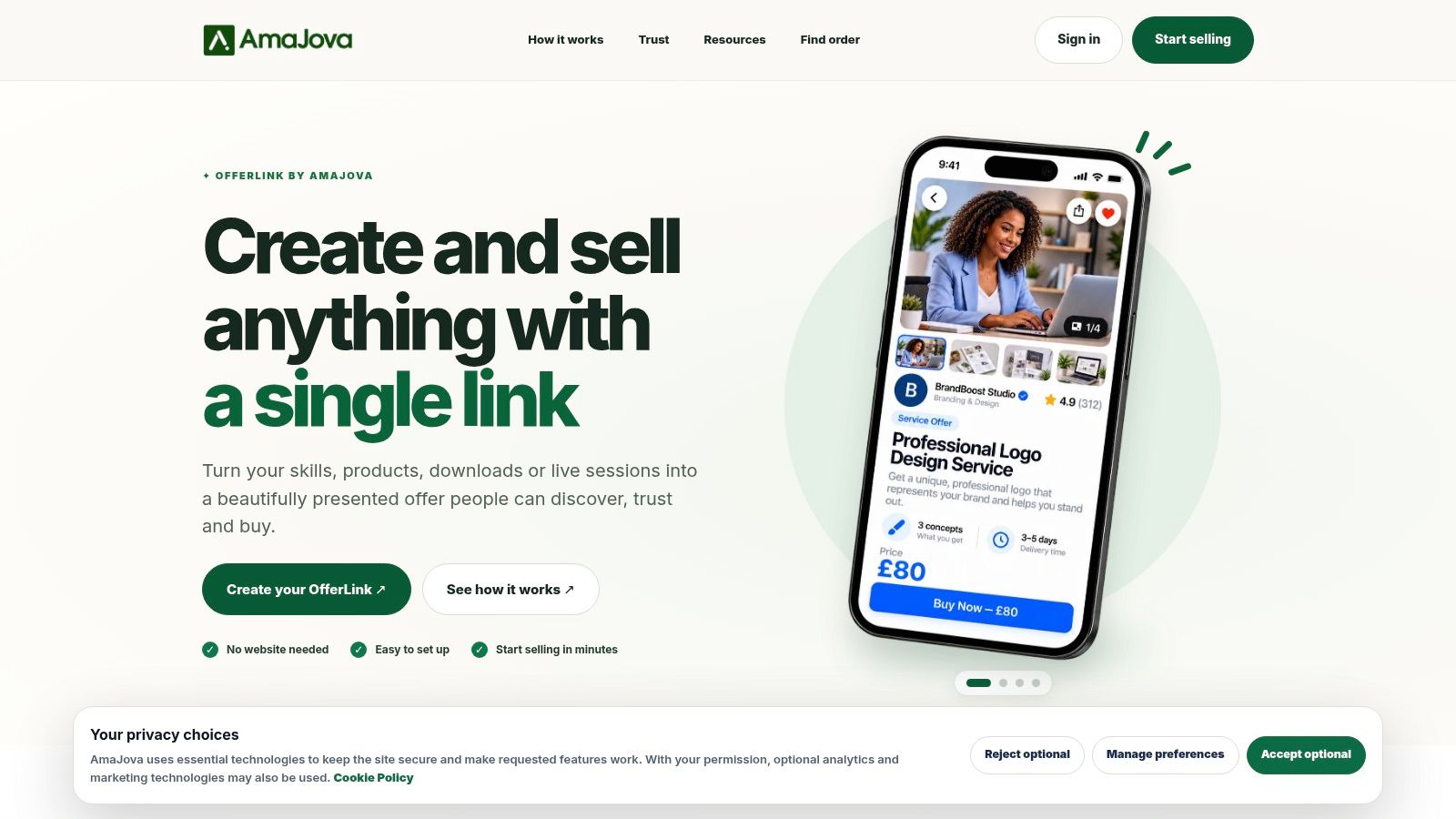
AmaJova collapses the whole transaction into one shared record. Services, physical products, digital products and live sessions each become a single OfferLink with secure checkout, so the scope, inclusions, price and fulfilment expectations sit on the page before anyone pays. Sellers can price in several currencies, and the platform carries seller verification, protection information and a structured seller progression program. The record works like a case file: everything that matters later attaches to it while the order is still healthy.
Build that file in the same order a claim would use it:
- Read the offer page as a specification. Title, inclusions, delivery timing, boundaries and optional extras are the terms you will quote back if something goes wrong. Vague wording on the page becomes the seller's defence later, so treat vagueness as a signal before you pay, not after.
- Pay through the platform checkout. A clear order summary and any Buyer Service Fee disclosure appear at the point of payment, and paying there is what makes the order record exist at all. Money sent outside it leaves no record to defend.
- Keep the conversation in the order. Messages, delivery or access steps, the timeline, payment record and completion status all attach to the same transaction, which is what a later chargeback depends on.
- Escalate inside the record first. Dispute status tracking and reporting routes mean your written request to the seller is dated and visible before a card issuer ever sees the file. That sequence matters, because issuers ask who you contacted first and when.
This setup earns its keep when you buy from independent sellers who would otherwise ask for a bank transfer with nothing in writing. It adds less with a large retailer whose returns portal is already the record. The buyer protection resources set out what the platform covers and how to report a problem, so read them while the order is still routine and the reporting path will already be familiar if you ever need it.
How a Refund or Dispute Claim Works Step by Step
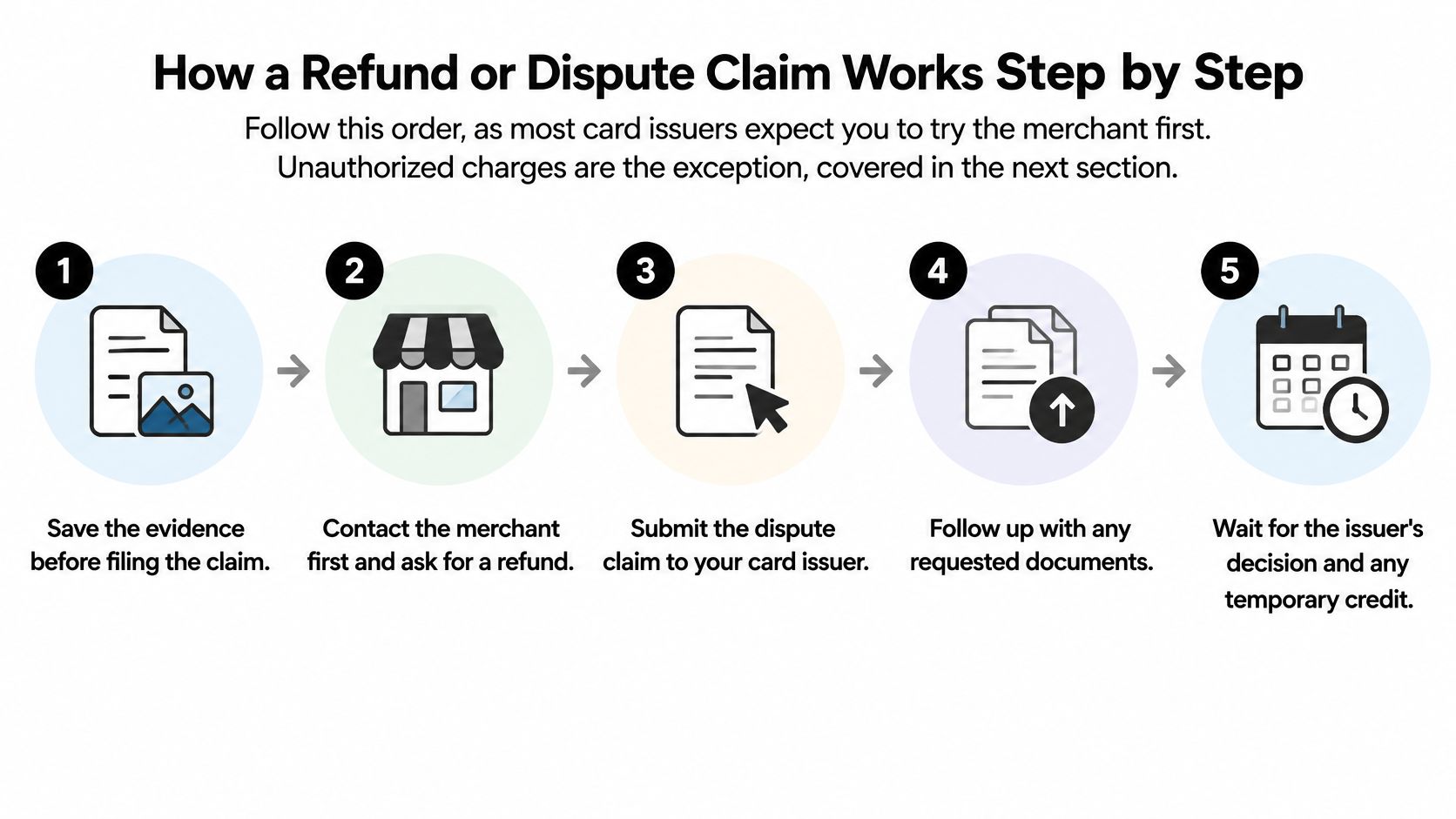
A claim works like a ladder: each rung is a different counterparty, a different remedy and a different clock. Issuers generally expect you to try the merchant before you file, so the order you climb matters as much as the evidence you carry. Unauthorized charges skip the ladder entirely; report those to your card issuer immediately. For everything else, the sequence below is what builds a file an investigator can approve without a second round of questions.
- Save the evidence before you contact anyone. Order confirmation, screenshots of the listing, the full message thread and any delivery tracking. Do this first, because your account may be closed or the listing edited by the time you need it.
- Put the request to the seller in writing. Name the problem, state the remedy you want (refund, replacement, partial refund) and give a deadline, typically 7 to 14 days. Keep it factual: this is the rung that creates the dated record every later rung depends on.
- Open a marketplace claim if you bought through one. File it before the platform's resolution window closes, since that window usually runs from the delivery date rather than from when you noticed the fault.
- Take it to your card issuer or payment provider. Request a chargeback and name the reason plainly: non-delivery, not as described, or unauthorized. Each reason code asks for different evidence, so match your file to the code you cite.
- Answer investigation requests the same day. Issuers work to their own clocks, and a missed deadline can close a valid claim.
- Escalate beyond the payment chain if it stalls. A local consumer agency or an alternative dispute resolution service is the next route when the seller and the issuer both stop responding.
Subscription renewals test this sequence hardest. Analysis of subscription cancellation practices in The Regulatory Review notes that a 2025 U.S. appellate decision invalidated the FTC's Click-to-Cancel rule on procedural grounds, and that a survey of about 1,200 consumers in the United States and the United Kingdom found 76% bypassed merchants and disputed charges directly with their banks.
That figure usually gets read as consumer abuse. Read it as a signal instead: the ladder has a correct entry point, and the bank is it when fraud is involved. Chargebacks can get a seller's account terminated, demand documentation, run on issuer-specific deadlines and invite a fight over whether a renewal was authorized. For a forgotten renewal or a service that stopped working, a dated written request to the seller does more for you, because it creates the record a later chargeback relies on.
The video below walks through the same sequence from the issuer's side.
A complete claim file holds five things: the order record, the evidence, a dated message log, the remedy you asked for and the deadline you set. Anything less and you spend the investigation reconstructing it.
Matching Your Problem to the Right Remedy
Your first move changes with the problem type, which is why "contact the seller" is bad advice for a third of the cases below.
| Problem | Evidence to keep | First move | Fallback |
|---|---|---|---|
| Unauthorized charge | Statement line, login or device records, bank fraud report | Report to your card issuer or bank immediately | Written dispute with the issuer, then a consumer agency |
| Item not received | Tracking record, delivery confirmation, order email | Message the seller, then open a marketplace claim | Card chargeback citing non-delivery |
| Item not as described | Listing screenshots saved at purchase, photos, seller messages | Request a return or partial refund in writing | Platform guarantee or card chargeback |
| Forgotten renewal after a free trial | Trial terms, reminder emails, records of cancellation attempts | Cancel and request a refund in writing | Chargeback stating the renewal was not authorized |
| Defective digital service | Error logs, support tickets, screen recordings | Support ticket with reproduction steps | Card chargeback or consumer agency complaint |
| Cross-border seller refuses a fix | Contract terms, payment receipts, all correspondence | Written demand to the seller, then the platform or card route | Local consumer centre or alternative dispute resolution |
Two rows explain the whole logic. An unauthorized charge goes straight to the issuer because the merchant has no record of authorizing it, so a message to support just burns days. A forgotten renewal is the opposite: cancel in writing first, because the chargeback turns on whether you can show you tried to stop it.
The IISD's analysis of cross-border consumer protection identifies the two barriers buyers hit most often: uncertainty about which country's law applies, and the practical difficulty of getting money back from a seller with no local presence. Both show up in ordinary complaints, from foreign sellers refusing to repair faulty goods to custom-made items that arrived wrong.
Take the custom-item case. The product doesn't match the order, and the seller blames the measurements you supplied. What decides it is the original listing specification saved at purchase, not the argument that follows. Before you escalate any cross-border purchase, run these checks:
- Identify the counterparty. The seller's legal entity, country and contact address, not just a brand name.
- Confirm who holds the money. Platform, marketplace or merchant of record.
- Read the governing-law clause in the terms and note the dispute forum it names.
- Check the payment method's deadline before you spend another week emailing.
The go or no-go rule: if you can't name the legal entity and produce the original listing text, you're not ready to escalate. Fix those two first. If they check out and the seller has missed your written deadline, move up a layer, and remember that a chargeback has its own reason codes and clocks that start well before you file.
Check These Points Before You Pay
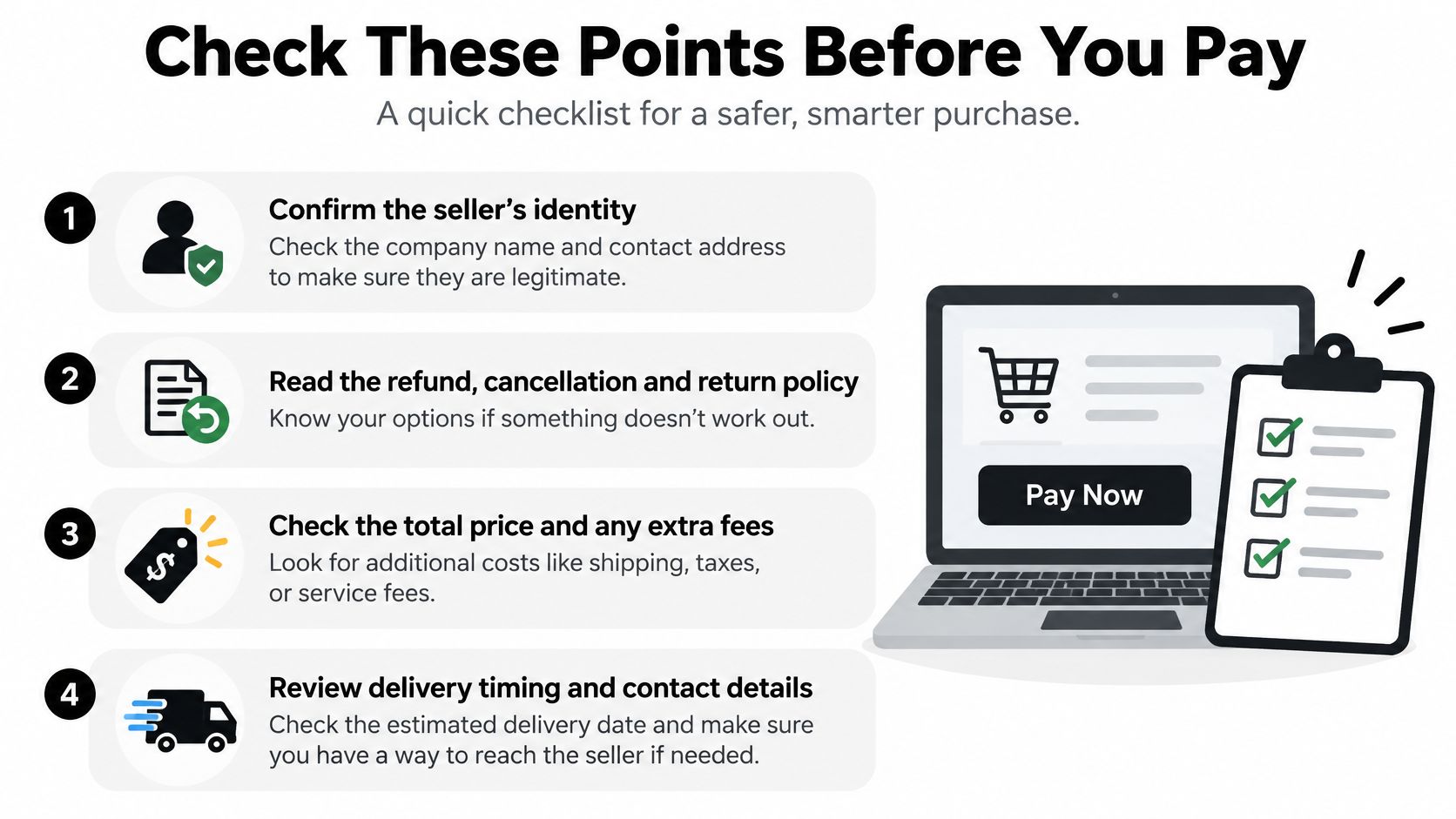
Five minutes at checkout saves months of argument. Trust signals matter to buyers for a reason: PwC's 2024 Voice of the Consumer Survey found 83% of consumers surveyed globally ranked personal-data protection among the most important factors in earning their trust, and a seller who won't state a company name is failing the simplest version of that test.
- Confirm the seller's identity. Legal company name, registered address, contact channel that isn't a single social account.
- Read the refund and cancellation terms and note the exact route. If cancellation means emailing an address that doesn't answer, that's a finding, not a detail.
- Check the trial conversion. When it ends, what it costs, and whether a card is charged automatically.
- Confirm the guarantee covers your purchase type and that you're paying through the platform rather than around it.
- Choose a payment method with dispute rights. A credit card or a platform wallet beats a bank transfer every time.
- Screenshot the listing, the terms and the checkout summary and drop them in one folder.
- For digital products, read the consent box and decide whether you accept losing the cancellation right in exchange for instant access.
- Set two calendar reminders. One for the trial end date, one a week before the claim window closes.
- Sanity-check the terms against the contract you're accepting, since the terms on a checkout page are the version that will be enforced.
If any check fails, don't argue with the page. Pay somewhere else, or switch to a method that restores the protection the seller just removed.
Start with the purchase you're about to make this week. Save the order confirmation and a screenshot of the listing to one folder, write the cancellation route in the same note, and set a reminder for a week before the claim window shuts. If something breaks later, you'll be holding a file instead of a complaint.