

Virtual Legal Assistants: The SaaS Founder's Guide
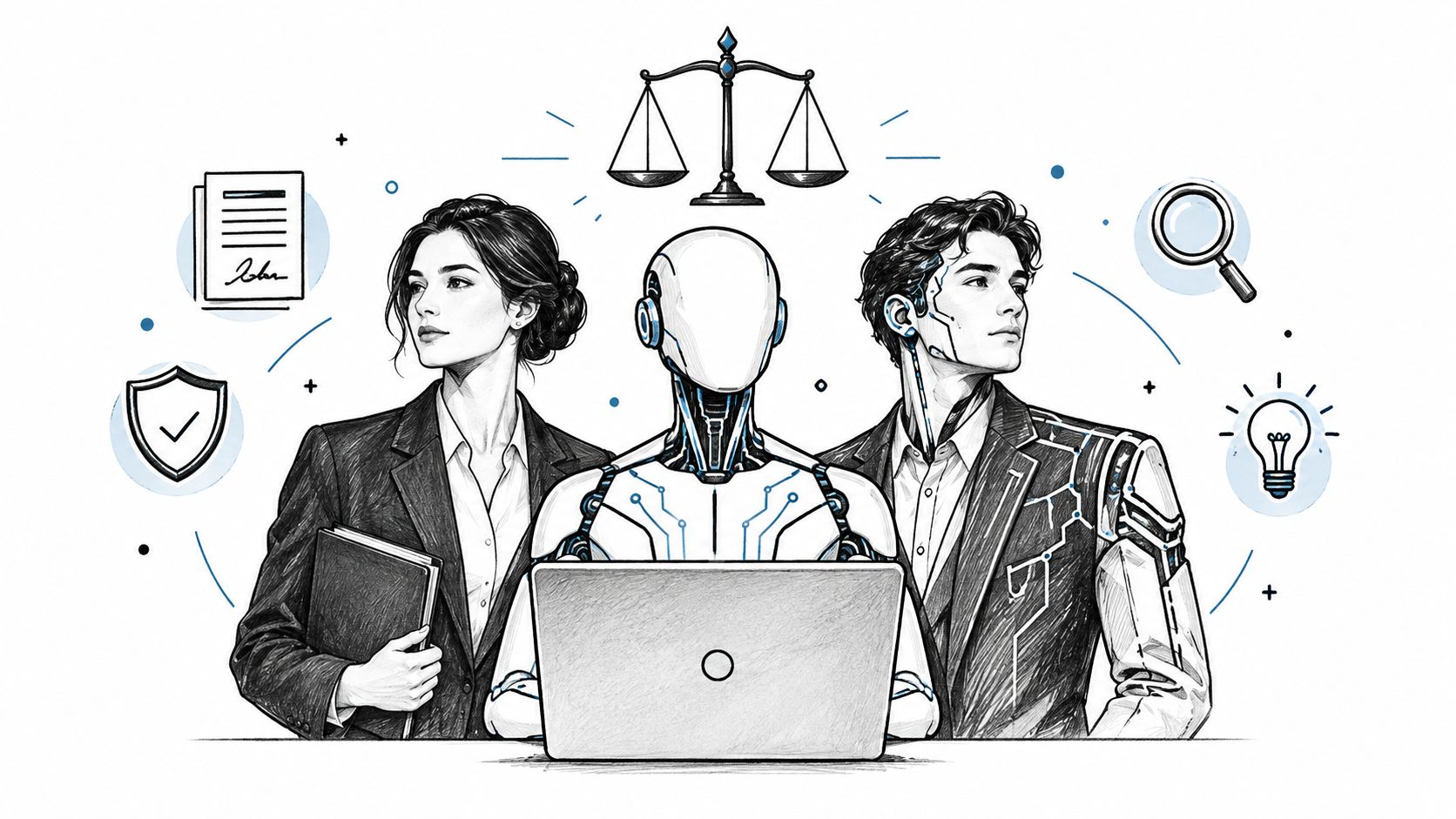
26% of legal professionals were already using generative AI in 2025, up from 14% in 2024. Yet only 13% said AI was already central to their organization's workflow. That gap captures the actual state of virtual legal assistants. Adoption has moved beyond experimentation, but dependable legal automation still depends on retrieval, controls, and human judgment. (Thomson Reuters, 2025 Generative AI in Professional Services Report)
For SaaS founders, the question isn't whether an AI assistant can produce fluent text. It can. The harder question is whether it can identify the correct authority, recognize uncertainty, protect confidential information, and stop before a low-confidence answer creates a compliance, contract, or intellectual-property problem.
Table of Contents
- The State of Virtual Legal Assistants
- Why General AI Fails Legal Work
- Understanding Assistant Types and Limits
- How LatHire Can Help
- Practical Applications for SaaS Operations
- The Human Verification Imperative
- Navigating Risk and Escalation
- Evaluation Criteria and Final Recommendations
The State of Virtual Legal Assistants
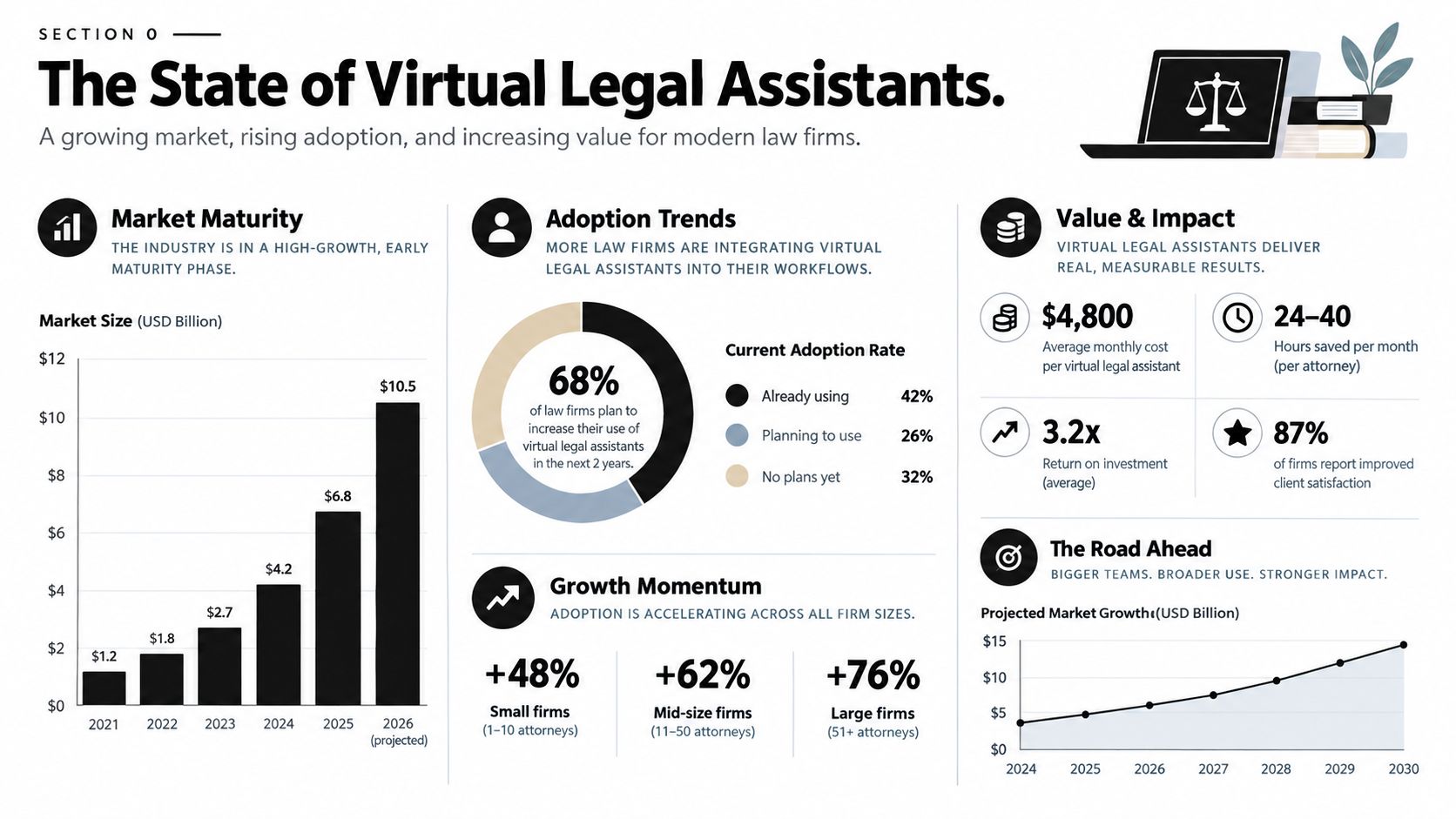
Virtual legal assistants are moving into routine legal operations, but they remain supervised systems rather than autonomous legal operators. Thomson Reuters surveyed 1,702 professionals across legal, tax, accounting, corporate risk, and government sectors during January and February 2025. Among legal professionals, active generative AI use reached 26%, compared with 14% in 2024, an 86% year-over-year increase. Across the professional-services sample, organizational use rose from 12% to 22%, while another 50% were planning adoption or deciding whether to proceed. (Thomson Reuters' 2025 report)
Adoption still comes with operational conditions. Teams are assessing confidential-data handling, workflow fit, governance, cost, and the consequences of an incorrect answer. Only 13% said generative AI was already central to their organization's workflow, although 29% expected it to become central within one year. For SaaS and digital-product companies, that gap favors a hybrid model: software handles repeatable preparation, while a qualified person verifies conclusions before they affect compliance, contracts, privacy, or intellectual property.
Where adoption creates value
The clearest uses involve large volumes of structured or semi-structured information. An assistant can classify contracts, summarize a policy, compare clauses, prepare an intake record, or locate passages in a repository. It can also produce a first draft, provided a qualified reviewer checks that draft against the underlying documents and records its source.
A separate Thomson Reuters survey of more than 1,700 legal professionals in the United States, United Kingdom, and Canada identified document review at 74% as the leading application, followed by legal research at 73%, document summarization at 72%, brief or memo drafting at 59%, and contract drafting at 51%. (Thomson Reuters' legal executive summary)
For a SaaS company, practical targets include contract repositories, privacy documentation, vendor reviews, product terms, IP records, and compliance evidence. Automation can prepare comparisons and surface missing material. It should not independently decide whether a clause is enforceable or whether a filing can proceed.
Founder's rule: Treat a virtual legal assistant as a controlled work queue, not as an unsupervised legal department.
The strongest product removes preparation work while preserving provenance, review ownership, and an escalation path. Fluency is useful, but a system that cannot show the source behind its recommendation creates more legal work than it removes.
Why General AI Fails Legal Work
General-purpose conversational AI is optimized to produce plausible language. Legal work requires something stricter: locating the applicable authority, distinguishing controlling material from background text, and showing how an answer follows from the retrieved sources.
A benchmark containing 197 statutes, 2,914 judicial cases, and 50 legal queries tested retrieval performance across complex legal tasks. General-purpose tools such as ChatGPT and NotebookLM showed poor discrimination. Dense semantic retrieval performed better, with an OpenAI text-embedding-ada-002 approach reaching 46.43% retrieval accuracy. Fine-tuning all-mpnet-base-v2 improved accuracy from 18.9% to 31.87%, a 68.6% relative increase. (Journal of Integrative and Generative AI and Law benchmark)
The lesson isn't that one embedding model guarantees legal accuracy. It's that architecture changes the failure mode. A system that retrieves relevant statutes, regulations, cases, and internal policies gives the language model a bounded evidence set. A system that generates first and searches later may produce a polished answer with no reliable legal foundation.
What a retrieval-grounded system needs
A credible virtual legal assistant should separate four jobs:
- Index authoritative material. Store statutes, regulations, case law, contracts, policies, and approved internal guidance with jurisdiction, date, document type, and version metadata.
- Retrieve candidate passages. Use embeddings to locate semantically relevant material, not only exact keyword matches.
- Rerank and filter. Prioritize controlling authority, current versions, relevant jurisdictions, and approved internal sources.
- Generate with citations. Require the answer to reference retrieved passages and expose uncertainty when the evidence is incomplete.
This is the practical foundation of retrieval-augmented generation. Teams evaluating implementation patterns can also review this AI training data guide, particularly when deciding how source quality and document versioning affect downstream output.
RAG reduces unsupported answers, but it doesn't eliminate them. A retrieved passage can be outdated, incomplete, or misapplied. The reviewer still needs to validate the legal reasoning, not just confirm that citations appear on the screen.
Understanding Assistant Types and Limits
The label “virtual legal assistant” covers very different operating models. A human-operated service, an AI-driven product, and a hybrid workflow may all handle intake or document preparation, but they carry different controls and failure patterns.
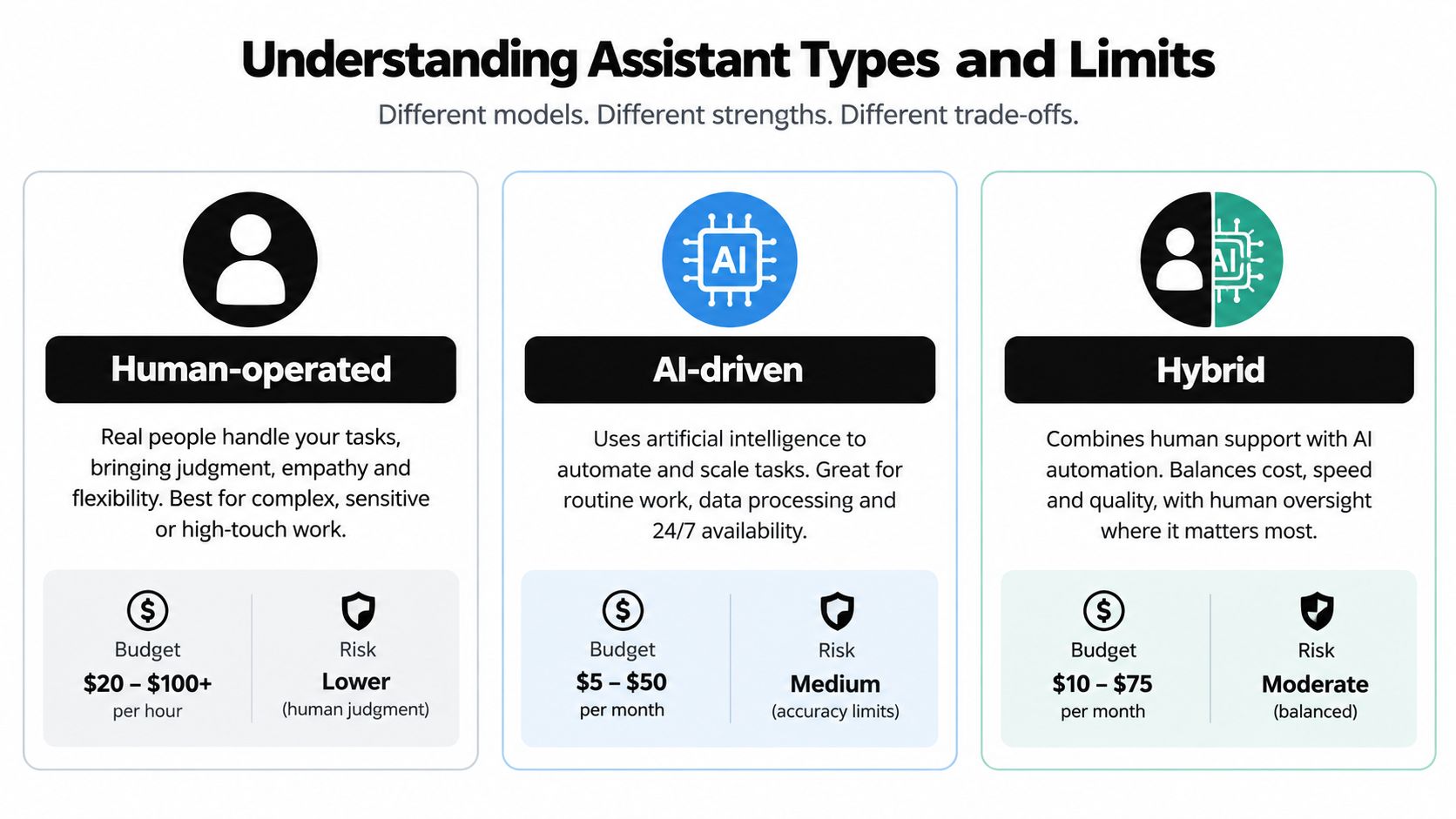
| Model | Best suited to | Main strength | Main limitation |
|---|---|---|---|
| Human-operated | Sensitive intake, unusual requests, relationship-heavy work | Context, judgment, and empathy | Capacity depends on staffing, training, and availability |
| AI-driven | Search, classification, summarization, routine drafting | Speed and consistent handling of repeatable queues | It can miss ambiguity, jurisdiction, urgency, or a conflict |
| Hybrid | Compliance-critical workflows and high-volume legal operations | Automation with accountable review | Requires clear handoffs, reviewer capacity, and audit design |
Human-operated support
A human assistant can notice that a customer's request doesn't fit the intake script. They can ask a clarifying question, identify a distressed user, or recognize that a deadline may matter. That context sensitivity is valuable when the input is incomplete or the consequences of delay are high.
Human support still needs procedures. A person can misread a document, use an obsolete template, or disclose information through an insecure channel. Human operation reduces some risks, but it doesn't replace access controls, training, supervision, or records of what happened.
AI-driven support
AI works best where the task has a stable definition of success. Examples include extracting renewal dates, comparing approved clauses, organizing a document set, or drafting a summary with source references. These tasks are narrow enough to test and monitor.
AI shouldn't make decisions about conflicts, legal advice, client eligibility, filing readiness, or the treatment of vulnerable users without oversight. Its speed can make a weak control more dangerous because the system may process a large queue before anyone notices a pattern of error.
Hybrid operation
The hybrid model assigns mechanical work to software and judgment to qualified people. The assistant retrieves and organizes evidence, drafts a proposed response, flags uncertainty, and routes the matter to a reviewer. The reviewer accepts, edits, rejects, or escalates it.
That design is more demanding than launching a chatbot, but it matches the risk profile of legal work. A useful LLM quickstart for product teams should be treated as an engineering starting point, not as proof that a general model is suitable for unsupervised legal decisions.
How LatHire Can Help
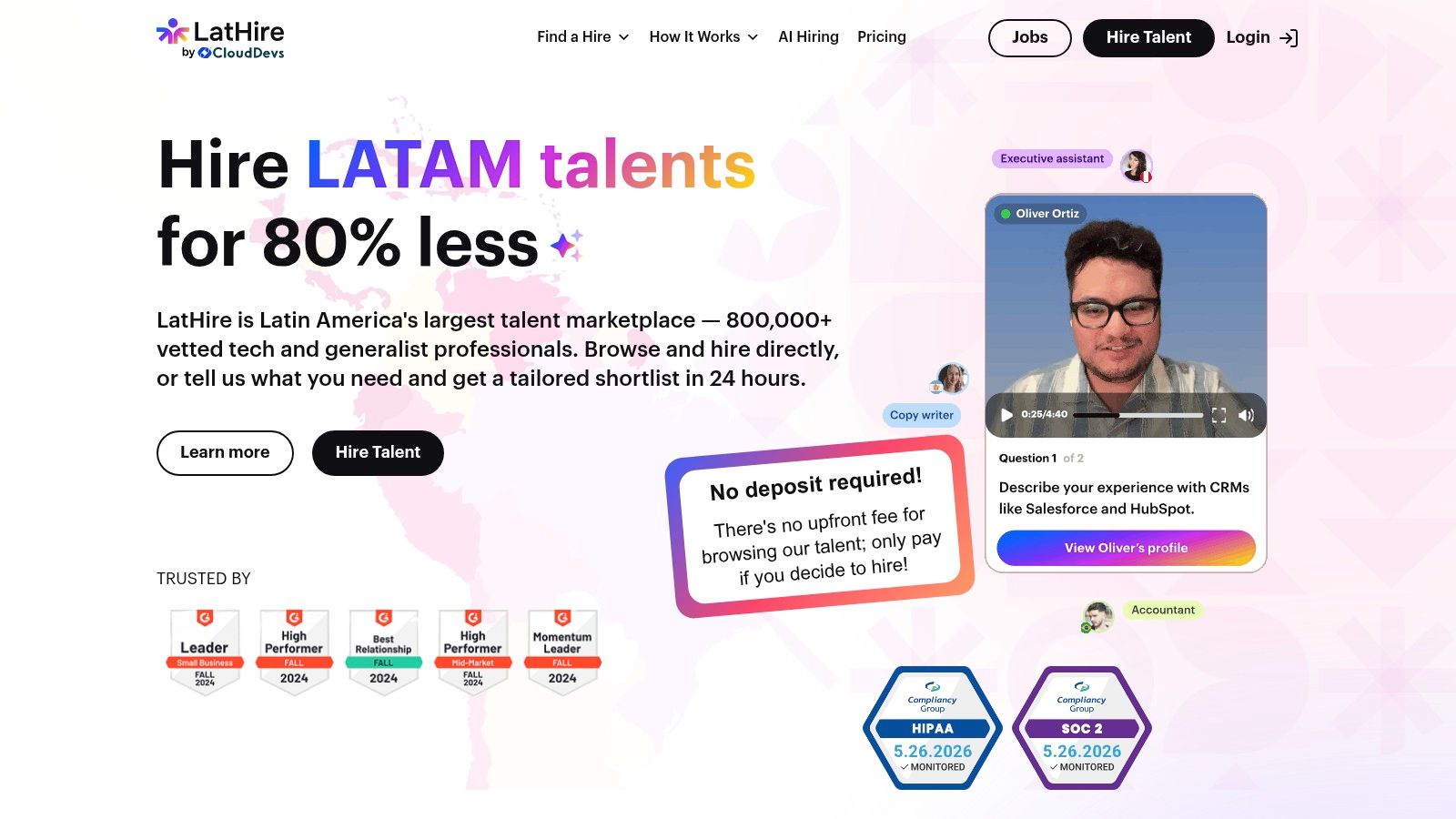
For SaaS founders, the practical value of LatHire is operational capacity around legal work. A trained professional can maintain records, prepare documents, coordinate requests, and route exceptions while qualified reviewers retain legal judgment. LatHire connects US and Canadian companies with pre-vetted Latin American professionals across technology, marketing, sales, and operations. Its process includes AI assessments, skills evaluations, and human-led background checks.
The platform covers job-description creation or import, candidate matching, HR support, international payroll, benefits, and legal-compliance administration. This can help a founder assign contract administration or compliance operations without personally recruiting, verifying, onboarding, and managing an international contributor. For more specialised legal support, HireParalegals focuses on remote legal assistants and paralegals. Founders considering this route should look for candidates with experience organising legal documents, tracking deadlines, and supporting attorney-led workflows. For a SaaS business, the relevant screening questions concern commercial contracts, document version control, and confidential records, rather than assuming that experience in any legal setting transfers directly to startup operations.
A useful role begins with a defined workflow and a clear review boundary. For example, an operations professional might maintain a contract register, route signature requests, collect evidence for a compliance checklist, organize IP records, or prepare a first-pass vendor questionnaire. A legal professional still determines whether the contract is acceptable, whether a policy meets applicable requirements, or whether an IP issue requires action.
Founders assessing external capacity can use LatHire's hire legal assistants resource to define responsibilities and screening criteria. The role description should separate three categories:
Administrative work: updating systems, organizing files, requesting signatures, and tracking status.
Drafting for review: preparing documents from approved templates and highlighting deviations.
Restricted judgment: legal advice, final approval, conflict decisions, and client-facing conclusions stay with qualified professionals.
The arrangement works best when procedures, secure systems, and a named reviewer already exist. A hire supplies an operator, not a complete control system. Founders must set permissions, escalation rules, and quality checks before granting access to sensitive SaaS contracts, customer information, or compliance records.
Practical Applications for SaaS Operations
Virtual legal assistants deliver practical value in SaaS operations when documents pass through repeatable stages. A contract repository can function as an active work queue instead of a passive archive. An assistant can identify missing fields, compare drafts with approved templates, extract renewal terms, route deviations, and assemble a review packet.
Document-heavy workflows suit automation because their success criteria are easier to define than those for legal judgment. A SaaS contract queue, for example, can require specific fields, approved fallback language, source citations, and clear escalation of unresolved issues. That structure supports AI assistance while preserving human control over the final decision.
Contract operations
A product team can use an assistant to compare requested data-processing terms with the company's approved position. The system can highlight altered liability language, missing security commitments, unusual termination rights, and undefined terms. It can then prepare a packet containing the disputed clause, approved fallback language, the relevant policy, and the question requiring review.
The assistant should not approve a deviation. A reviewer decides whether the commercial context supports accepting it and records the decision so similar contracts receive consistent treatment.
Compliance evidence
Compliance work often requires evidence from scattered systems. A virtual legal assistant can request policy attestations, classify security documents, identify expired materials, map evidence to control descriptions, and prepare a gap list for the compliance owner.
The workflow depends on traceability. The system should retain document versions and show the source supporting each conclusion. A completed checkbox is not evidence if nobody can identify the underlying document or the person who approved the result.
IP and product documentation
Digital products create recurring IP tasks involving feature names, domain records, contributor agreements, open-source notices, and ownership documentation. An assistant can maintain an inventory, match records to projects, flag missing agreements, and prepare focused questions for counsel.
Legal interpretation remains outside that automation. The assistant should not decide whether a mark is registrable, whether a license fits the product's distribution model, or whether an ownership dispute exists. Those conclusions may depend on facts the system cannot verify.
Intake and internal support
An assistant can collect structured facts from sales, product, or support teams before legal review. It can ask which entity signed the agreement, which users or jurisdictions are affected, what deadline applies, and which documents are available. Counsel receives a clearer starting point, while missing information becomes visible earlier.
Each workflow needs a visible human approval gate. Berkeley Center for Law & Technology practical guidance states that lawyers remain responsible for AI-assisted work and must independently review, verify, and correct generated outputs. For SaaS teams, that means combining automation for repeatable preparation with qualified review for compliance-critical conclusions.
The Human Verification Imperative
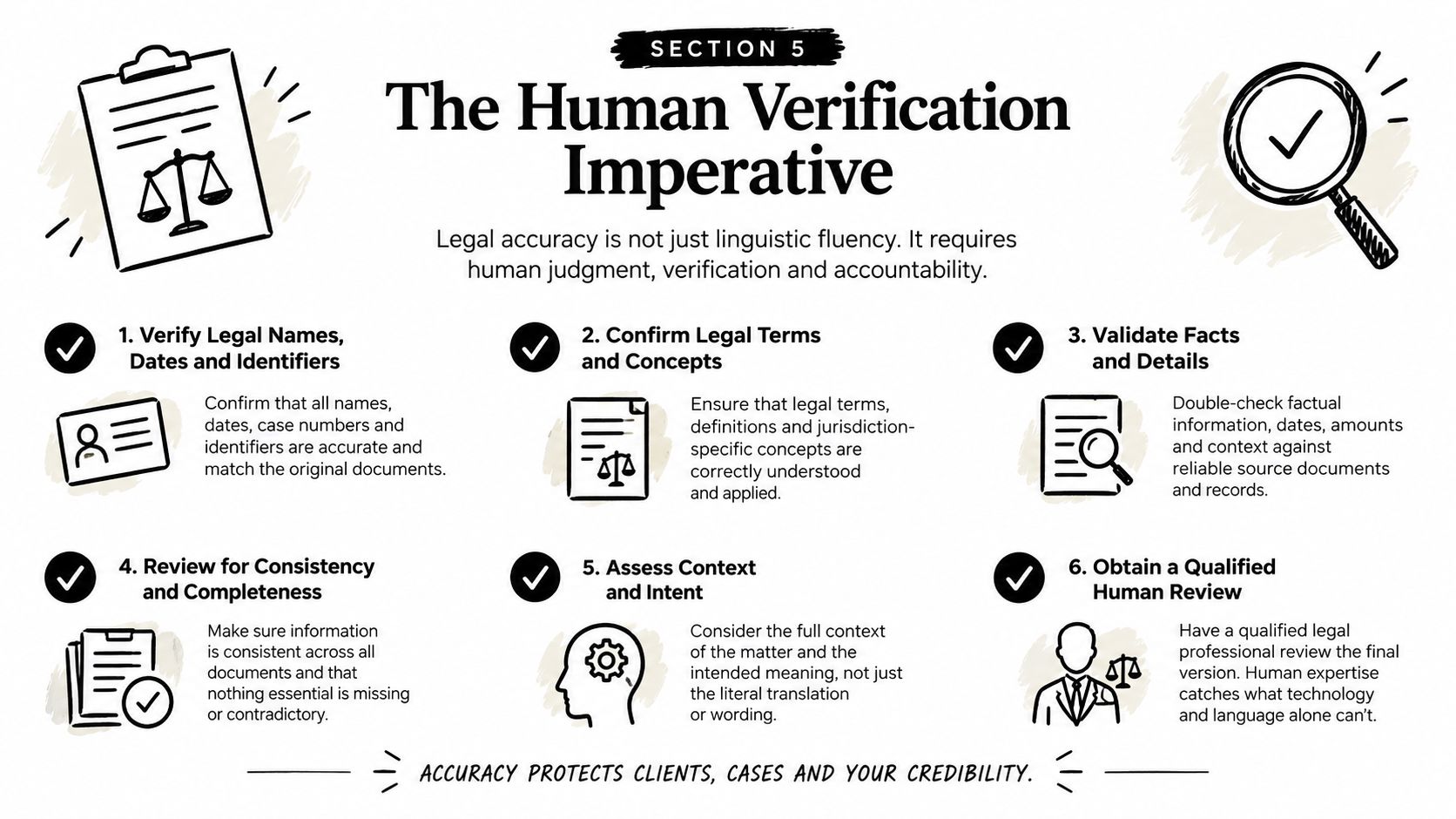
A fluent answer can still be wrong where it matters. In SaaS legal workflows, readability often hides unsupported conclusions. A reviewer must compare the generated answer with the governing document before anyone relies on it, especially when the result affects customer rights, product terms, or compliance obligations.
Berkeley guidance assigns lawyers responsibility for understanding an AI system's capabilities, data sources, limitations, and risks. It also requires independent review, verification, and correction. For digital product teams, those duties must appear in the workflow itself. Pure automation can prepare an answer quickly, while a human reviewer decides whether the evidence supports using it.
Controls that belong in the product
Build verification into the interface and the audit trail:
- Source provenance: Display the document, passage, version, and jurisdiction supporting the output.
- Uncertainty signals: Identify missing evidence, conflicting sources, weak retrieval confidence, and unanswered questions.
- Version history: Record uploaded documents, prompts, generated text, edits, approvals, and final disposition.
- Approval gates: Block unreviewed content from reaching clients, courts, production contracts, or public policies.
- Access restrictions: Give each user and system only the information required for assigned work.
- Retention controls: Define how long prompts, files, outputs, and audit records remain available.
A secure identity verification workflow matters when workspace access depends on a person's identity, role, or approval status. Authentication alone does not address permissions that remain broad after someone changes teams or leaves the company.
Verification rule: No AI-generated legal output should become an external commitment until a qualified reviewer has checked the source, reasoning, jurisdiction, date, and intended audience.
Confidentiality requires the same discipline. Client information should enter a generative-AI interface only where appropriate safeguards govern storage, access, retention, model use, and deletion. A vendor that cannot explain those controls is not ready for confidential legal work.
Navigating Risk and Escalation
A virtual legal assistant becomes risky when it answers smoothly despite missing facts, uncertain authority, or a need for human judgment. In SaaS products, that failure can turn a support response into an inaccurate legal commitment, expose confidential information, or trigger an irreversible operational action.
A May 2025 survey of 56 legal-aid organizations across Africa, Asia, Europe, and the Americas found that AI was used mainly for internal work, including search, translation, content generation, and proofreading. Far fewer organizations used it to inform, advise, support, or resolve people's legal problems directly. Nearly one-third identified bias or discrimination as a danger, while staff readiness averaged 5.8 out of 10. (HIIL report on AI and access to justice)
That caution matters for digital product teams. A chatbot that performs well in conversation may still fail on jurisdiction, deadlines, conflicting obligations, or incomplete customer facts. Pure automation is appropriate for preparation and routing. Compliance-critical decisions require a human-verification hybrid.
Escalation should be treated as a product control, not an informal instruction to “ask legal.” Configure a handoff when the request involves:
- Urgency: A deadline, filing date, threatened termination, preservation obligation, or possible irreversible harm.
- Jurisdiction: An unknown or disputed country, state, regulator, court, or governing contract law.
- Conflicts: Parties, products, entities, or interests that may create a conflict of interest.
- Vulnerability: Distress, language barriers, disability, minors, coercion, or limited access to support.
- Novelty: No approved template, policy, or authoritative source addresses the situation.
- Low confidence: Weak retrieval, conflicting sources, or reasoning the assistant cannot explain.
- External action: Advice, accepted terms, signatures, filings, customer commitments, or changes to legal records.
The handoff message should state what the system completed and what remains for a reviewer. “I can organize the information, but a qualified professional needs to review this before action” sets a safer boundary than a definitive answer based on incomplete facts.
Test these controls with adversarial scenarios, including ambiguous jurisdictions and misleading source documents. Review escalation records for missed triggers, unnecessary blocks, and repeated failure patterns. Before connecting an assistant to sensitive SaaS systems, use this security documentation guide to examine access, storage, retention, and operational safeguards.
Evaluation Criteria and Final Recommendations
Choose virtual legal assistants by workflow risk, not by how natural their demo conversation sounds. A credible vendor should show the retrieval pipeline, source citations, document-version handling, access controls, retention settings, and reviewer approval path.
Ask these questions before deployment:
- Can the system retrieve from approved authorities and internal documents?
- Does every substantive answer expose its supporting source?
- Can reviewers edit, reject, and escalate outputs?
- Are prompts, files, versions, decisions, and approvals logged?
- Can the system block external delivery until approval?
- How does it handle jurisdiction, dates, conflicts, and uncertainty?
- What happens to confidential information during processing and retention?
- Can administrators test performance against representative documents?
Start with a narrow, document-heavy workflow such as contract intake, policy comparison, or evidence collection. Define acceptable output, assign a reviewer, measure failure patterns qualitatively, and expand only after the control path works under real conditions.
The best model for compliance-critical SaaS work is human-verification hybrid automation. AI should reduce search and preparation time. People should retain authority over interpretation, approval, client communication, and irreversible action.
If your SaaS team needs more capacity for contract administration, compliance operations, or IP documentation, start by mapping the workflow and separating routine execution from legal judgment. For referral and affiliate operations that support a growing digital product team, Refgrow offers an in-app platform with a 14-day free trial, API and webhook support, automated commissions, and reporting designed for SaaS workflows.