

Building Brand Advocates Your SaaS Can't Live Without

Turning your happiest customers into a proactive, volunteer marketing team is one of the most powerful things you can do for your business. This isn't just about customer satisfaction; it's about fostering real enthusiasm that sparks word-of-mouth referrals, builds deep-seated trust, and creates a sustainable growth model.
Why Brand Advocates Are Your Best Growth Engine

Forget about outdated loyalty programs that just hand out points. The smartest SaaS companies I've worked with know their most potent growth channel isn't another ad campaign or a bigger sales team—it's their existing customer base. These aren't just users who are content with your product. They're true advocates, the ones actively promoting what you do to their own networks.
When you start thinking this way, marketing stops being a siloed department and becomes a mission for the entire company. To build a successful advocacy program, you need your product, sales, and customer success teams all pulling in the same direction. It’s a complete shift in how you see the customer journey. The moment someone buys from you isn't the end of a transaction; it's the beginning of a powerful growth loop.
A Company-Wide Effort
Advocacy isn't just a marketing task anymore. Today's best programs are cross-functional, pulling from every corner of the business to find and nurture potential champions. In fact, most advocacy initiatives now draw from an average of five or more sources, with sales, events, and even senior management leading the way in identifying great candidates.
This collaboration is especially critical in B2B SaaS. I've seen sales teams close deals 20-30% faster simply by using authentic customer stories and testimonials. You can dig deeper into how these programs are changing in the 2025 Advocate Marketing Global Survey.
This integrated approach helps you build programs on genuine relationships, not just transactional rewards. The goal is to make your advocates feel like valued insiders—to create a sense of community and belonging that money alone can't buy.
The core idea is simple: stop treating customers like endpoints in a funnel and start seeing them as the engine for your flywheel. When you invest in their success, they invest in yours.
This guide will walk you through a practical framework for building a growth engine that's driven by your community. We’ll cover the essentials for getting it right:
- Pinpointing your true fans by looking beyond surface-level metrics.
- Engaging them meaningfully with experiences that add genuine value.
- Offering incentives that matter, balancing monetary and non-monetary rewards.
- Tracking the real impact on your bottom line, from CAC to LTV.
This isn't about chasing vanity metrics. It's about creating a powerful, self-sustaining growth loop fueled by the people who believe in you the most.
Finding Your Advocates Hiding in Plain Sight
Your best advocates are already in your corner. They’re the people who use your product, love it, and are probably already telling their friends about it. The trick isn't finding them from scratch; it's learning how to spot them within your existing customer base. They're hiding in your data, just waiting for an invitation to do more.
Forget about relying solely on a high Net Promoter Score (NPS). While it’s a nice metric to have, a survey response doesn't always translate to real-world action. The most authentic advocates reveal themselves through what they do, not just what they say on a form.
Look Beyond Simple Surveys
To really find these hidden champions, you need to dig into their everyday interactions with your product. Think about the customer who sends in a support ticket just to praise your team for a quick fix. That positive experience is fresh in their mind, making them a perfect person to share that story.
Also, keep an eye on who’s adopting new features right after you launch them. These are your most engaged, forward-thinking customers. They’re invested in where your product is going and clearly see its value, which means they're far more likely to talk about it.
You don't need some complex algorithm to create an "advocate score." Just build a simple, internal metric that combines things like high product usage, positive support tickets, and community engagement. This simple step turns identification from a guessing game into a repeatable process.
Segmenting for Success
Once you start noticing these behaviors, you can group these users into segments to spotlight your most promising advocates. Don't just throw everyone into one big bucket. Instead, create specific cohorts based on their actions.
- High-Frequency Users: Who's logging in every single day? Or using your core features way more than the average user? These are your power users.
- Community Leaders: Pinpoint the people who are constantly answering questions in your user forum, Slack channel, or community group.
- Positive Feedback Providers: Keep track of users who leave glowing reviews or provide detailed, thoughtful feedback after a new release.
Creating these segments lets you tailor your approach. For example, you could invite a community leader to an exclusive Q&A with your product team or give a high-frequency user early access to a new beta feature. This kind of targeted outreach feels personal and valuable, making it much more likely they’ll say yes to joining your program. For a deeper dive, our guide on how to find brand ambassadors offers more structured methods.
It's also smart to look at different influencer marketing strategies. This can help you find influential voices outside your immediate user base who can complement the efforts of your internal advocates.
Finally, a quick, in-app survey can be the perfect way to confirm your suspicions. A simple, one-question poll asking if they'd be willing to recommend you is all it takes. It’s a low-friction way to get a clear signal that they’re ready for an invitation.
Designing an Advocate Program People Actually Want to Join
Let's be honest: the best advocate programs don't feel like a marketing campaign. They feel like a VIP club. If you're serious about building brand advocates, the experience you create has to be something people are genuinely excited to be a part of. The key is making it both seamless and rewarding from day one.
A great way to do this is by bringing the program inside your product. Don't send your best customers to some clunky, third-party portal that looks nothing like your brand. Instead, build a clean, native, in-app dashboard. This simple move makes the program feel like a natural part of the user experience and gets rid of the friction that kills engagement.
Before you can invite anyone, though, you need to know who to ask. This flowchart breaks down the signals I look for when pinpointing potential advocates.
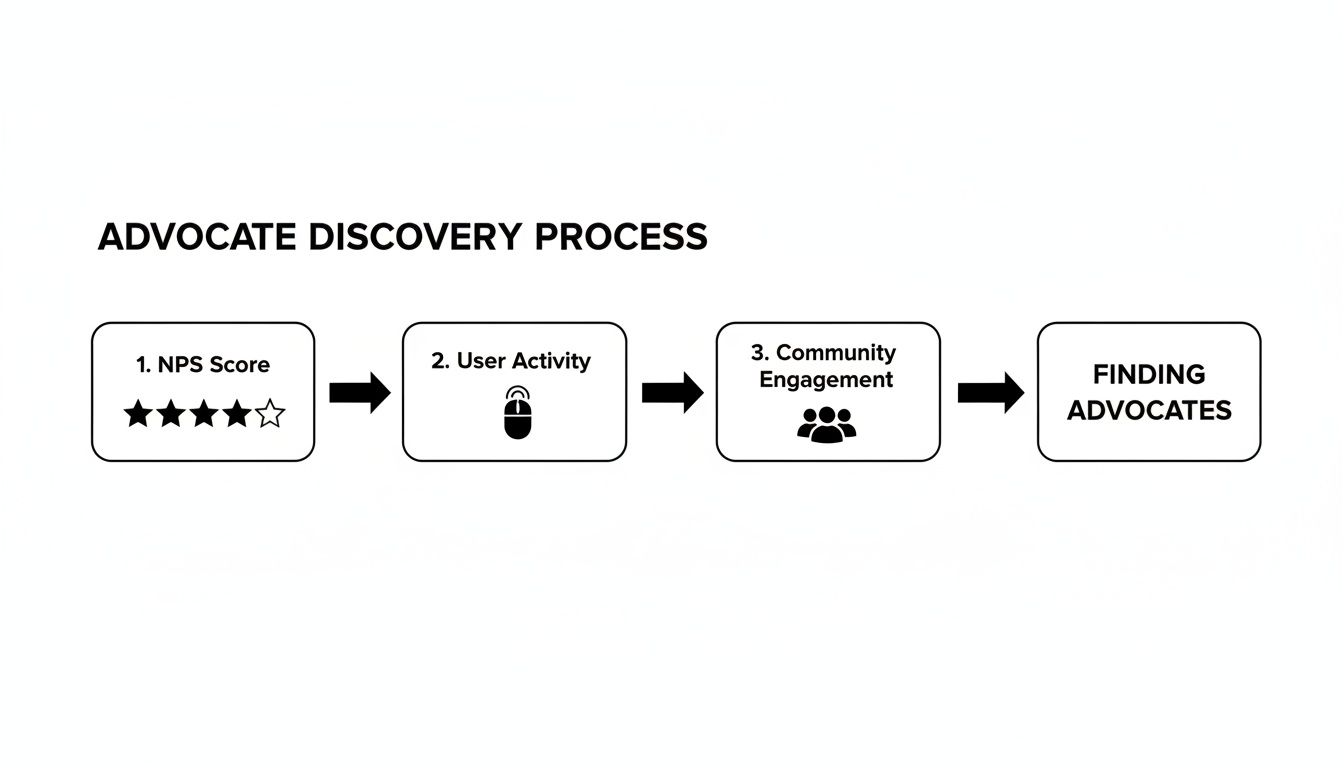
As you can see, finding your future champions is a mix of art and science. It combines hard data like NPS scores with softer signals, like how active someone is in your community.
Structuring Incentives That Truly Motivate
A smooth user experience is half the battle, but the incentives you offer are what really make or break the program. Sure, you could just throw cash at people, but that often misses the point. The most successful programs I've seen are built on reciprocity—you make your advocates feel so incredibly valued that they want to shout your name from the rooftops.
Think beyond just money. A smart mix of monetary and non-monetary rewards will appeal to a much broader range of motivations.
- Flexible Commissions: A recurring percentage of the subscription fee is a powerful motivator. As long as their referred customer stays, they get paid. It creates a reliable income stream they can count on.
- Tiered Rewards: People love a good challenge. Create different levels that unlock bigger and better rewards as advocates hit specific milestones. This gamifies the whole experience and keeps them pushing for the next goal.
- Exclusive Access: This one costs you nothing but is incredibly valuable. Give your advocates early access to new features or a spot in your beta program. They'll feel like true insiders helping to shape the product's future.
- Direct Founder Access: For your absolute top performers, offer a 1-on-1 call with the CEO or a founder. This kind of personal connection is a rare and powerful reward that builds unshakable loyalty.
Making your advocates feel like valued partners is often more powerful than a simple cash payout. When someone feels heard and appreciated, their advocacy shifts from a transactional task to a genuine endorsement.
Choosing the Right Incentive Model
So, what's the right mix of rewards? It completely depends on your product, your audience, and what you’re trying to achieve. A high-ticket B2B SaaS company might find that cash commissions are king. On the other hand, a brand with a passionate community might get more mileage out of exclusive access and status-based perks.
When in doubt, just ask! Run a quick survey with your initial group of potential advocates to see what they would find most valuable.
To help you get started, here’s a quick comparison of the most common incentive models I've seen work in SaaS.
Advocate Incentive Models for SaaS
Choosing the right incentive structure is critical for motivating your advocates. This table breaks down common models to help you find the best fit for your program.
| Incentive Model | Best For | Pros | Cons |
|---|---|---|---|
| Recurring Cash Commission | Subscription-based SaaS with high LTV. | Highly motivating; creates long-term advocate engagement. | Can be costly; requires robust tracking. |
| One-Time Cash Bonus | Products with a one-time purchase model. | Simple to manage; provides immediate gratification. | Doesn't encourage long-term advocacy. |
| Product Credits/Discounts | SaaS where users have variable costs. | Cost-effective; encourages deeper product usage. | Less appealing if advocate already has full access. |
| Non-Monetary Perks | Strong community-driven brands. | Builds deep loyalty; fosters a sense of exclusivity. | May not motivate all personality types. |
Ultimately, there isn't a single "perfect" model. The goal is to design a program that feels generous, fair, and perfectly aligned with your brand's values. Get the combination of seamless integration and thoughtful incentives right, and you'll build an advocate program that doesn't just drive growth—it strengthens the very community that fuels your business.
Keeping Your Advocates Engaged for the Long Haul

Getting advocates to sign up for your program is just the starting line, not the finish. The real work—and where the massive value is—begins now. It's all about keeping them actively engaged for months and even years to come. A program that starts with a bang but fizzles out won't deliver the sustainable growth you're after.
True success comes from building lasting, reciprocal relationships. This means you have to move beyond a purely transactional mindset. Sure, the initial incentive got them in the door, but it’s the ongoing communication, support, and feeling of being valued that will keep them there. Building genuine brand advocates requires a steady rhythm of interaction that makes them feel appreciated, informed, and truly part of your story.
Find a Consistent Communication Rhythm
Regular, valuable communication is the bedrock of any successful long-term engagement strategy. And no, this isn't about spamming their inboxes with generic marketing blasts. It’s about creating a communication flow that actually helps them and keeps your brand top-of-mind in a positive way.
Your communication should be a mix of practical support and genuine inspiration. For instance, a monthly newsletter can be a great place to highlight your top-performing advocates, share success stories, and announce new product features they can get excited about. This creates a powerful sense of community and a little healthy competition.
The goal is to make every interaction feel less like a marketing email and more like an insider briefing. When advocates feel they're getting special information, their enthusiasm and sense of belonging go through the roof.
A well-rounded communication plan could look something like this:
- Monthly Updates: Share program wins, give shout-outs to top advocates, and offer sneak peeks of what's coming next.
- Instant Notifications: Let them know about new campaigns or fresh content they can share right away.
- Personal Check-ins: A quick, non-automated email to your top performers can make a huge impact. It shows you're paying attention.
Developing this kind of communication cadence is a core piece of any effective community engagement strategy and ensures your advocates never feel forgotten.
Arm Your Advocates with the Right Tools
One of the biggest hurdles to getting people to share is friction. If it’s too much work, even your most passionate supporters will eventually drift away. Your job is to make advocating for your brand as effortless as possible by giving them high-quality, ready-to-use materials.
Think of it as building an "advocacy toolkit" that removes all the guesswork. Provide pre-written social media posts, eye-catching graphics, and short video clips they can share with a single click. You're basically creating a library of assets that empowers them to represent your brand professionally and effectively.
Treat Your Top Advocates Like Strategic Partners
Your most dedicated advocates are so much more than just referral sources. They are powerful partners who can offer immense strategic value. When you start treating these long-term collaborations more like creator partnerships, you build a level of trust that traditional advertising can't even touch.
Recent industry analysis has shown that brands fostering multi-year creator collaborations saw 35% higher customer retention rates. This is huge. In a world where people are more skeptical than ever, this shift toward authentic, long-term relationships is a major differentiator. Verifiable stories from real users build an ecosystem of trust that one-off campaigns simply cannot match. You can explore more about how reputation is being redefined in The State of Global Branding report.
By nurturing these key relationships, you create a powerful feedback loop. These advocates provide you with invaluable product insights while simultaneously amplifying your message. It’s how you turn your program into a self-sustaining engine for growth and customer retention.
How to Measure the Real ROI of Your Advocate Program
If you can't measure it, you can't prove it works. To justify your advocate program to stakeholders—and to truly understand its value—you have to move beyond vanity metrics like shares or clicks. The real story is in the numbers that tie directly to business growth.
This is all about building a data-backed case for investing in your biggest fans. Your main goal is simple: connect the dots between what your advocates do and the revenue that follows. That means tracking the entire referral journey, from the moment a link is shared to the second a new customer makes a purchase.
Key Metrics That Actually Matter
To get a true picture of your ROI, you need to zero in on a handful of high-impact metrics. These aren't just about counting activity; they reveal the quality and financial impact of the new business your advocates are sending your way.
- Referral Conversion Rate: This is your bread and butter. It's the percentage of people who came from a referral link and actually became paying customers. A healthy conversion rate tells you your advocates are hitting the right audience with a message that resonates.
- Customer Lifetime Value (LTV) of Referred Customers: Are the customers brought in by advocates more valuable in the long run? You need to find out. Track their LTV and stack it up against customers acquired from other channels. More often than not, you'll find that referred users stick around longer and spend more.
- Impact on Customer Acquisition Cost (CAC): A well-oiled advocate program should drive down your overall CAC. It’s a simple comparison: how much does it cost to acquire a customer through your program versus what you’re shelling out for paid ads? The difference is often staggering.
A strong advocate program isn't just another marketing channel. It creates a powerful halo effect, making all of your other channels more efficient. The trust and social proof generated by real customers boost conversion rates across the board.
Digging Deeper with Advanced Tracking
Once you've nailed the basics, it's time to dig deeper to really fine-tune your program's performance. The first thing you'll want to do is identify your top-performing advocates. You'll likely find that a small group of super-advocates is driving the majority of your results. Recognizing and rewarding these champions is absolutely critical for keeping the momentum going.
Next, analyze which channels are bringing in the best results. Are referrals from LinkedIn converting better than those from a personal email? This is the kind of data that lets you guide your advocates on where to focus their energy for the biggest impact. By getting into these details, you can stop guessing and start making strategic moves. For a more detailed breakdown, you can explore the essential referral program metrics to track in our dedicated guide.
This kind of granular measurement is what separates a decent program from a truly great one. The YouGov 2025 Most Recommended Brands report, which is based on over a million interviews, makes it clear: customer recommendations are the ultimate signal of brand health. When your existing customers are willing to recommend you, it shows a level of loyalty that translates directly into sustainable growth. You can discover more about the power of brand recommendations in the full report.
Answering Your Top Questions About Building a Brand Advocate Program
Even with a solid plan, building an advocate program from scratch can feel a little daunting. A few common questions always seem to pop up for SaaS founders and marketers, and getting the answers straight from the get-go can save you a ton of trouble later on.
Let's clear up some of that uncertainty. My goal here is to help you build your program with confidence, sidestepping the usual mistakes that can kill your momentum before you even start.
How Many Advocates Do I Actually Need to Make This Work?
It’s tempting to think you need a massive army of advocates to see any real impact, but that’s not the case. When you're just starting out, quality beats quantity every single time.
Forget chasing hundreds of sign-ups. Your initial goal should be to find a small, hand-picked group of 10-20 people who are genuinely fired up about your product.
This first group is your sounding board. They're the ones who will give you priceless feedback, help you iron out the kinks in your process, and generate that all-important initial buzz. Once you've nailed the experience for them, you can start thinking bigger. Trust me, a small crew of true believers will run circles around a huge, disengaged crowd.
The biggest mistake I see people make is treating their advocate program like a vending machine. They just throw a cash reward out there, set it, and forget it. That's a guaranteed way to fail.
Real advocacy is built on relationships. If you don't celebrate their wins, offer support, and make them feel like true insiders, their excitement will fizzle out fast. You have to invest in the people, not just the transaction.
Should I Offer Cash or Something Else?
This is the age-old debate, isn't it? The truth is, there’s no single right answer. The most successful programs I’ve seen blend different types of incentives to appeal to everyone.
Cash is a great motivator, no doubt about it. Offering a recurring percentage for a paying customer they referred is a simple, powerful way to drive results. But cash alone doesn’t build a community or foster that deep-seated loyalty you’re after. That’s where non-monetary rewards come in.
I always recommend a tiered, hybrid model. Think of it this way:
- Financial Rewards: This is your foundation. Offer cash commissions or product credits for successful referrals. It’s the transactional piece that keeps things moving.
- Exclusive Perks: This is where you make them feel special. Give your top advocates things money can't buy, like early access to new features, a private chat with your CEO, or custom swag that isn't for sale.
- Public Recognition: Never underestimate the power of a shout-out. Featuring your top performers in your newsletter or on social media gives them status and shows them they’re genuinely valued.
By mixing it up, you cast a wider net. Some people are in it for the extra income, while others are motivated by the access and recognition. A program that offers both is far more resilient and creates a much stronger sense of partnership.
Ready to turn your best customers into your most powerful growth channel? With Refgrow, you can launch a fully native, in-app affiliate program in minutes. Stop sending your users to clunky external portals and start building a seamless advocacy experience they'll love. Get started today at refgrow.com.