

White Label Referral Software: Boost Customer Growth

Here’s a way to think about white label referral software: imagine you want a bespoke suit. Instead of weaving the fabric and sewing every stitch yourself, you hire an expert tailor. They use a proven pattern but customize the fit, fabric, and details until it looks and feels like it was made just for you.
That’s exactly what white label software does for your referral program. It gives you a powerful, pre-built engine that you can rebrand to match your application perfectly, from the color scheme to the domain.
Understanding the Core Concept

At its core, a white label solution lets you launch a fully branded referral program without the headache and massive expense of building one from the ground up. Your users never leave your environment. The dashboard, the referral links, and the entire experience feel like a natural extension of your own product.
This is a game-changer for building trust. When a customer decides to refer a friend, they aren't jarred by a third-party logo or an unfamiliar interface. That kind of friction can kill momentum. Instead, they interact with a system that reinforces your brand's credibility, making them far more likely to participate.
Key Advantages of This Approach
So, why is this model becoming so popular? It boils down to speed and control. Companies can get a sophisticated program running in a fraction of the time it would take to develop one in-house. Many platforms today even offer no-code setups, making integration a breeze.
This strategy puts you in the driver’s seat, allowing you to:
- Maintain Complete Brand Consistency: Your logo, colors, and voice are everywhere. The program is your brand, not an awkward add-on.
- Plug Into a Proven Growth Engine: You get all the benefits of a battle-tested referral system without the risks and bugs of a V1 build.
- Build Deeper Customer Trust: When the program feels native, users feel more secure and confident sharing your product with their network.
It’s worth noting that while they are distinct, white label referral tools often work hand-in-hand with broader affiliate marketing programs. You can see how this same concept applies to partnerships by reading our guide on building a white label affiliate program.
Why a Branded Program Drives More Referrals
Think about your most passionate customer for a second. They love your product and want to tell a friend about it. They click a referral link in your app, but suddenly they're whisked away to a strange, generic-looking website with branding they don't recognize.
That jarring transition is a trust-killer. It creates instant friction and doubt right when you need the experience to be smooth and reassuring. This is the classic problem with slapping a third-party referral tool onto your product.
A fully branded program, built with white label referral software, sidesteps this issue completely. By keeping the entire referral journey inside your own branded environment, you maintain that crucial trust and make your customers feel safe and confident sharing your product.
Building Trust Through Cohesion
When your referral program looks and feels like it’s part of your actual product—not just some add-on—it feels intentional and professional. That seamless integration is what convinces people to actually participate, because it gets rid of any nagging questions. Users aren't left wondering if the tracking is working or if the link they're about to share is even legit.
This is a huge deal, especially for small and medium-sized businesses trying to tap into the power of word-of-mouth. Considering that over 72% of consumers trust recommendations from people they know, the credibility of your referral system is non-negotiable. White label tools give you a quick way to launch a trustworthy program that boosts both customer retention and new sign-ups.
A referral program’s success hinges on trust and simplicity. When the experience feels native to your brand, it inherits all the credibility you've already built with your customers, making them more confident advocates.
This cohesive approach turns a simple marketing tactic into a powerful growth engine that reinforces your brand. When every touchpoint—from the dashboard your customer sees to the unique links they share—carries your logo and design, it deepens their connection to your company. Check out these powerful referral program examples to see how top brands make this happen.
At the end of the day, a branded experience isn't just about looking good. It’s a core strategy for getting more of your best customers to bring you even more just like them.
What Makes a Great White Label Referral Program Tick?
So, what separates a powerful white label referral platform from one that just doesn't deliver? It’s not just about generating links. A truly high-performing system is a full-blown growth engine, and without the right tools under the hood, even the best referral concept will sputter and stall.
Let's break down the must-have features.
Deep Brand Customization
First and foremost, you need deep brand customization. This is way more than just slapping your logo on a pre-made template. The best solutions let you use a custom domain, so every referral link and landing page feels like an extension of your own website, building trust right from the start.
You should also have total control over the little details that make a big difference—the color schemes, fonts, and even the copy in the email notifications. The goal is to create an experience so seamless that your users don't even realize they're interacting with a third-party tool. It should feel native to your product.
Flexible Rewards That Actually Motivate
Next up is reward flexibility. A one-size-fits-all incentive structure is a recipe for a low-performing program. People are motivated by different things, so your software needs to keep up.
Look for a platform that supports a wide range of reward types, from straight cash payouts and recurring commissions to practical incentives like account credits or discounts on a subscription. This versatility means you can design a reward system that genuinely resonates with your audience and drives real participation.
Rock-Solid Automation and Analytics
At its core, a referral program lives and dies by its tracking. Trying to manage this manually is a nightmare of spreadsheets, human error, and lost trust. A non-negotiable feature is automated, real-time tracking that correctly attributes every single sign-up to the right person, every time.
If you want to get into the weeds of how this works, our guide on referral tracking software breaks down all the technical essentials.
This infographic really highlights the difference between a basic, off-the-shelf tool and a true white label platform.
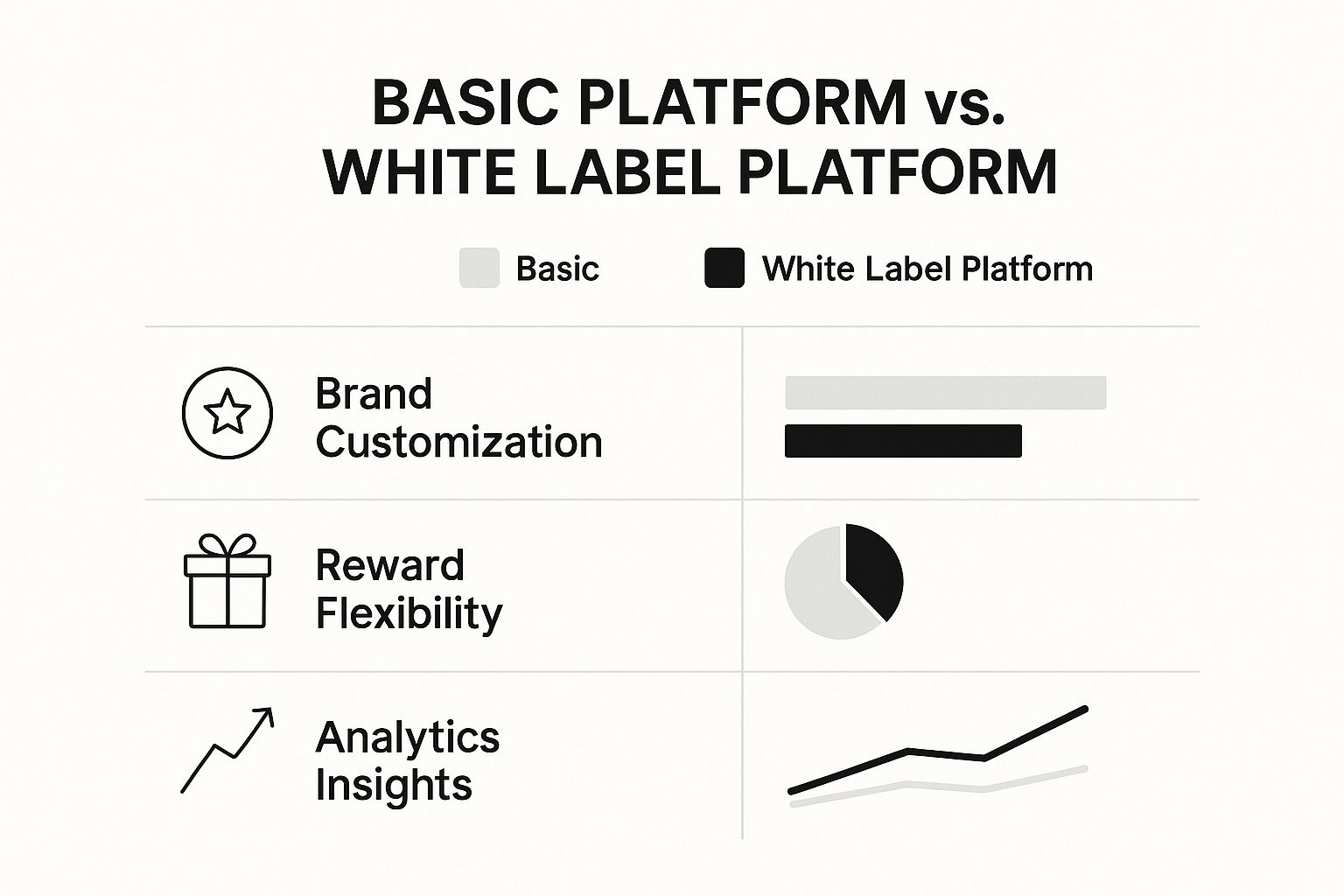
As you can see, having full control over the branding and deeper insights into performance makes a world of difference.
To make sense of all this automated tracking, you need a robust analytics dashboard. We're not talking about vanity metrics here. You need actionable data that helps you make smarter decisions. Your platform should give you a clear view of key performance indicators (KPIs) like:
- Referral Conversion Rate: What percentage of referred leads actually become customers?
- Top Performers: Who are your most influential brand advocates?
- Revenue Generated: How much bottom-line growth is your program really driving?
Without these core features, you're flying blind. A real white label solution gives you the customization, flexibility, and hard data you need to build a customer acquisition channel that scales with your business.
To make this even clearer, let's compare a standard, off-the-shelf solution with a white label one side-by-side.
Comparing Standard vs White Label Referral Software
This table breaks down the fundamental differences you'll encounter when choosing a platform.
| Feature | Standard Referral Software | White Label Referral Software |
|---|---|---|
| Branding | Limited customization. Often includes "Powered by" logos. | Fully customizable to match your brand's look and feel. |
| User Experience | Users interact with a third-party interface, which can be jarring. | A seamless, native experience that feels part of your product. |
| Domain | Uses the software provider's domain for links and pages. | Uses your own custom domain, reinforcing brand authority. |
| Integration | Basic integrations, often requiring workarounds. | Deep, API-first integrations for a truly embedded program. |
| Flexibility | Rigid reward structures and program rules. | Highly flexible reward options and customizable logic. |
Ultimately, the choice comes down to control. A standard solution gets a program running quickly, but a white label platform gives you the power to build a truly integrated and optimized growth engine that becomes a core part of your brand.
How to Create a Seamless Referral Experience

Picking the right white label referral software is just the starting line. The real magic happens when you weave it into your own product, and that’s where most companies stumble. A clunky, disjointed setup kills user trust and tanks adoption before your program even has a chance.
The whole point is to make the referral experience feel so native that your customers never even realize it's powered by a third-party tool. Every single element, from the user dashboard to the notification emails, has to look and feel like you. It should be a natural extension of your product, not some awkward, bolted-on feature.
Aligning the User Interface and Experience
Your top priority should be making the referral interface a perfect visual match for your existing app. This goes way beyond just slapping your logo on it. True white labeling lets you customize the nuts and bolts—colors, fonts, button styles—to create a look that’s completely seamless.
When a customer clicks over to their referral dashboard, they shouldn't even notice a transition. Think of it like adding a new room to your house. You’d use the same paint, flooring, and style so the new space feels like it was always part of the original blueprint.
The most successful referral programs feel like a core feature, not a marketing campaign. This deep integration builds inherent trust and encourages users to share with confidence.
Establishing Trust with Custom Domains
Nothing shatters the illusion of a native experience faster than a weird, unfamiliar URL. Using a custom domain for your referral portal is an absolute must-have for building credibility. Instead of sending people to referrals.some-platform.com, you host the entire program on a subdomain like referrals.yourbrand.com.
It’s a small change, but it tells your users that the entire experience is secure and managed directly by you. This branding needs to extend to every single touchpoint:
- Email Notifications: Your invitation, reward, and update emails should look identical to the other transactional emails you already send.
- Landing Pages: Any pages you build for referred friends need to carry your brand, your voice, and your messaging.
- Referral Links: Use clean, shortened links that are clearly from your brand, not a random third party.
By obsessing over these details, you remove all the friction and doubt. You give your customers the confidence they need to become your best advocates.
Why Referral Marketing Isn't Just a "Nice-to-Have" Anymore
In a world where ad costs are constantly climbing and buyers are more skeptical than ever, trust has become the most valuable currency you can have. Traditional advertising just isn't cutting it like it used to, which means businesses need smarter, more authentic ways to grow.
This is exactly where referral marketing steps in. It's no longer a side project; it's a core growth strategy.
Instead of shouting into the void with expensive ads, you're essentially empowering your happiest customers to become your best advocates. They already have the trust and social proof that you'd otherwise spend a fortune trying to build from scratch. One of the biggest wins here is its proven impact on reducing customer acquisition costs.
And this isn't just a fleeting trend. The referral marketing software market was projected to explode from $226.9 million in 2019 to an incredible $713.3 million by 2027. That kind of growth tells you everything you need to know about where the market is heading.
The Power of a Genuine Recommendation
Think about it: when a friend or a respected colleague recommends something, you listen. It cuts through the noise and skepticism we all have towards polished corporate ads. That genuine trust is precisely why referred customers are so valuable—they tend to stick around longer and have a higher lifetime value. They show up already believing in what you do.
By investing in a referral program, you're not just chasing one-off sales. You're building a self-sustaining growth engine fueled by the real-world success of your users.
Opting for a white label referral software is the key to tapping into this power without disrupting your brand's look and feel. It makes the whole referral experience feel seamless and native—a natural extension of your product, which is crucial for turning satisfied customers into your most powerful growth channel.
Frequently Asked Questions
Jumping into referral marketing often brings up a few questions. To help you out, I've pulled together the most common ones we hear about white label referral software. The goal here is to give you clear, straight answers so you can figure out the best path for your SaaS.
How Much Does White Label Referral Software Typically Cost?
The price tag can swing quite a bit. It really depends on the provider, the features you need, and how many people you expect to have in your program. Most tools run on a monthly subscription, which could be less than $100 for a startup plan or several hundred for an enterprise setup with all the bells and whistles.
But here’s a better way to think about it: focus on the return, not just the cost. A solid referral program often pays for itself surprisingly fast by bringing down your customer acquisition costs, especially when you compare it to what you're spending on paid ads.
Is This Type of Software Difficult to Set Up?
Honestly, no. One of the biggest perks of modern white label tools is that they’re built to be incredibly user-friendly. The best platforms offer no-code setups, with simple guides for connecting to tools like Stripe or a flexible API if you want a completely custom integration.
Your main job isn't wrestling with code—it's the strategic stuff. You'll spend your time dialing in the design to match your brand and figuring out a reward system that actually gets your customers excited. You can usually do all of this from a simple dashboard, no developers needed.
The whole point of a great white label platform is speed. You should be able to get a referral program that feels native to your product up and running in days, not months. That way, you start seeing a return almost right away.
What Kind of Results Can I Realistically Expect?
While your mileage will vary based on your product and how compelling your rewards are, the data is pretty clear: referred customers are just better customers. They tend to stick around longer (higher LTV) and are less likely to churn because they showed up with a built-in layer of trust from a friend.
When done right, a referral program can become one of your most powerful and scalable growth channels. Keep an eye on your referral conversion rate, the customer acquisition cost (CAC) for these new users, and the overall revenue your program is generating. It's not uncommon for SaaS companies to see a positive ROI within just a few months.
Can I Customize the Rewards for My Referrers?
Absolutely. In fact, if a platform doesn't offer flexible rewards, you should probably walk away. It’s a core feature of any good white label referral software. Every user base is different, and top-tier tools give you plenty of options to find what works for yours.
You can usually mix and match different kinds of incentives to see what sticks, including:
- Cash payouts for a simple, direct reward.
- Account credits to encourage deeper product engagement.
- Subscription discounts that give customers a break on their bill.
- Exclusive features or early access to new releases.
Getting the rewards right is the key to getting people to participate, so having this flexibility is a must.
Ready to launch a referral program that feels like a core part of your product? Refgrow makes it simple. With an embeddable, fully customizable dashboard and no transaction fees, you can build a powerful, native growth engine in minutes. See how Refgrow can accelerate your growth.